








Statement on Monetary Policy
A quarterly RBA report that assesses current economic and financial conditions, as well as the outlook considered by the Monetary Policy Board when making interest rate decisions.
Financial Stability Review
A half-yearly RBA report that assesses the resilience of the financial system, identifies key vulnerabilities, and outlines potential risks to financial stability.
Economic and Financial Bulletin
A quarterly publication that contains analysis and updates on economic and financial developments, as well as information on the RBA’s history and operations.
About Monetary Policy
2024 amendments to the Reserve Bank Act 1959
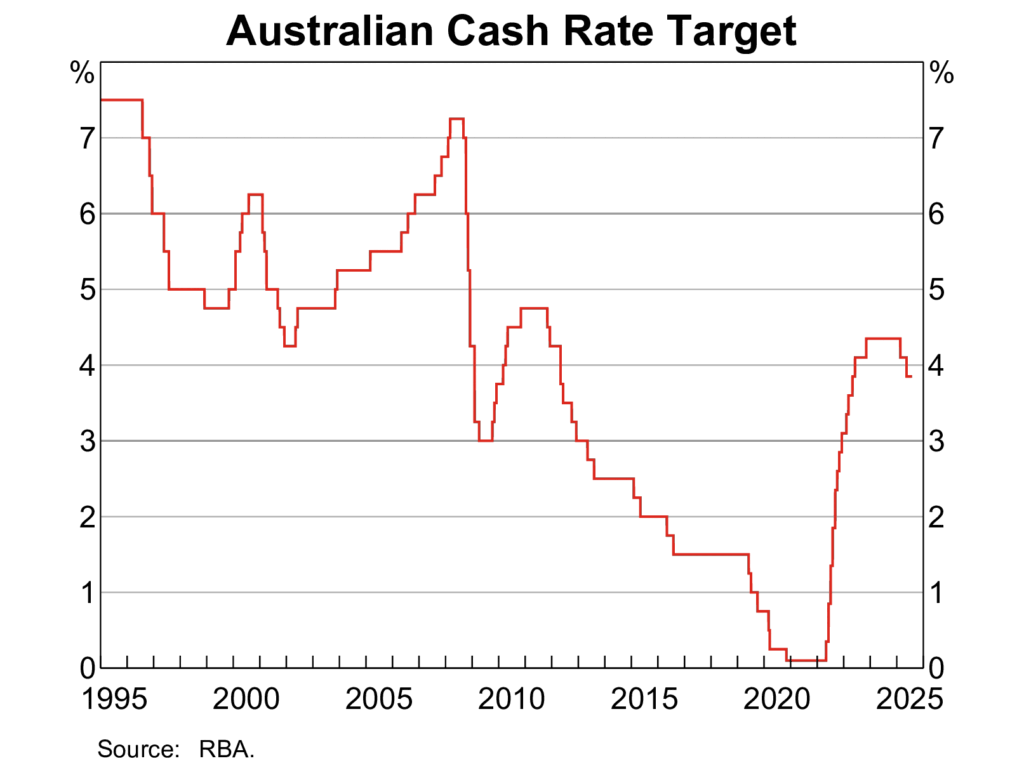
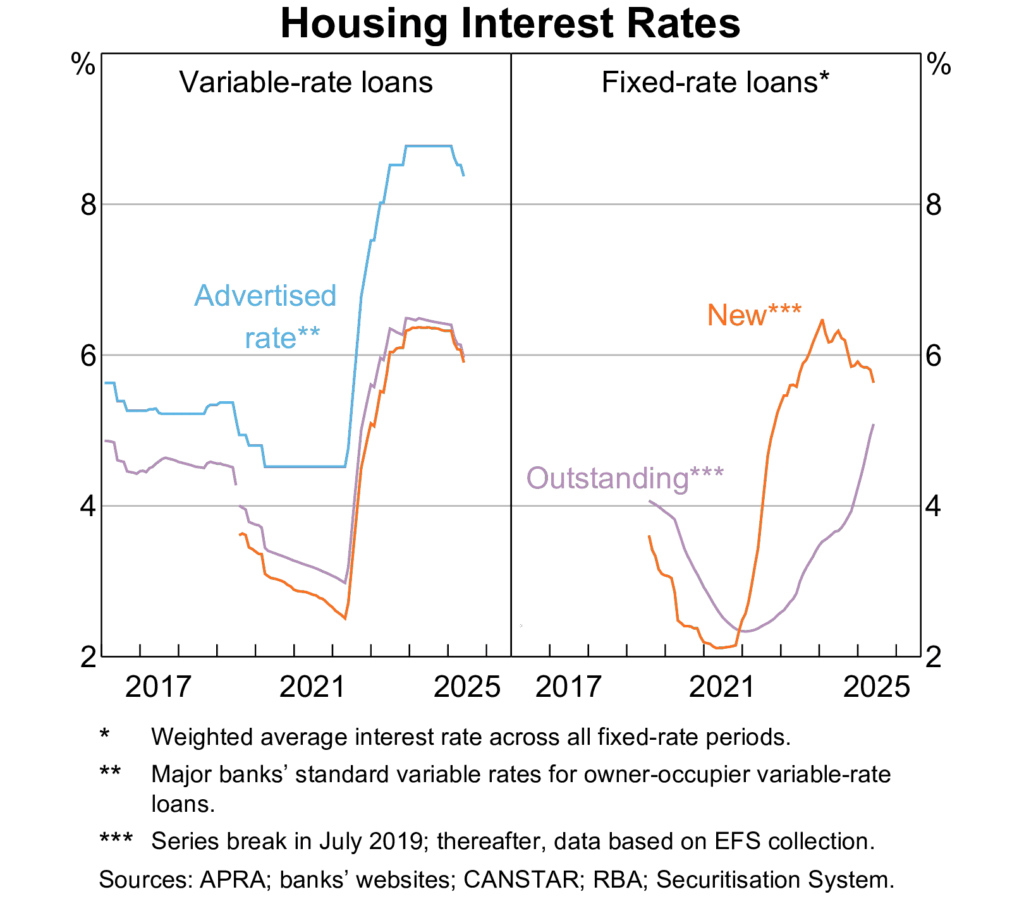
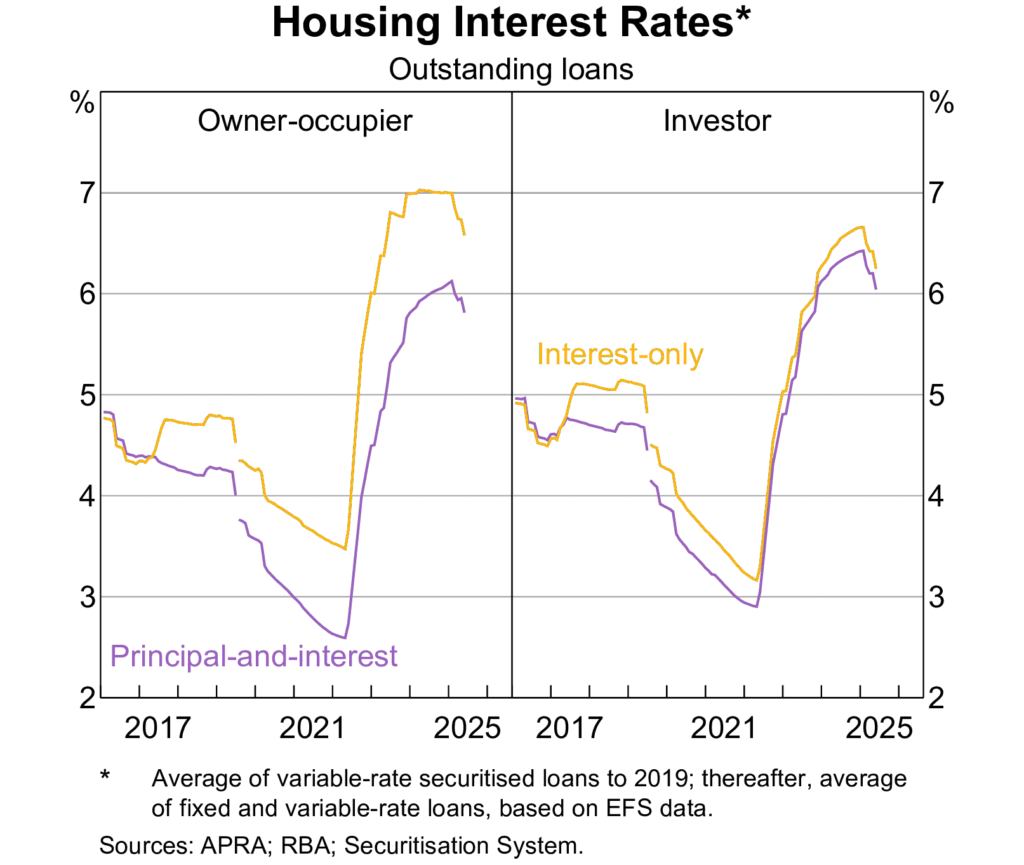
The Reserve Bank of Australia is responsible for formulating and implementing monetary policy. Its Monetary Policy Board sets the target cash rate, which is the interest rate on overnight loans in the interbank market. The cash rate shapes loan and saving rates, which usually move in tandem.
The overarching objective is to support the economic prosperity and well-being of the Australian people, both in the present and over the long term.
DUAL MANDATE GOALS:
1. price stability in Australia; and
2. the maintenance of full employment in Australia.
Monetary Policy Decision
Media Conference – 2026 5th Policy Meeting
Full June Media Conference – Recorded on 11 August 2026
Decision
The cash rate target was unchanged at 4.35 per cent. The policy decision was unanimous.
Inflation
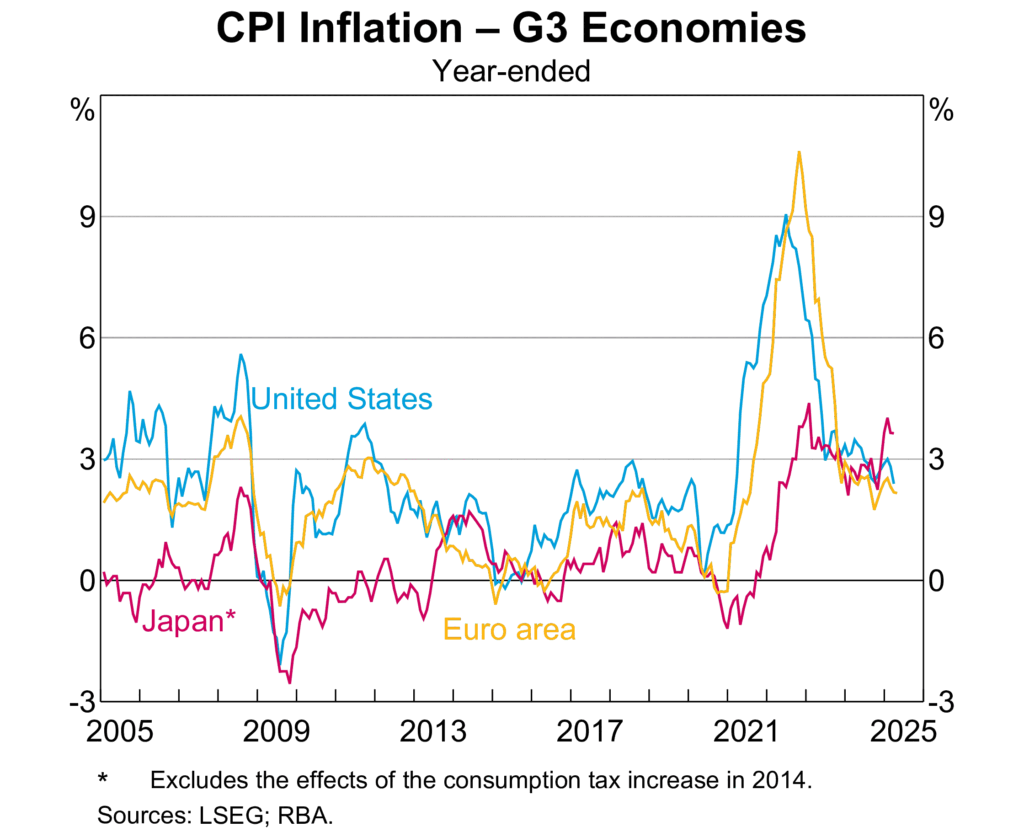
The headline inflation is too high, and underlying inflation also remains elevated. Energy and most related commodity prices stay above where they were prior to the conflict in the Middle East. Disruption to global oil supply is adding directly to inflation, and higher fuel costs are passing through to a wider range of goods and services, keeping inflation high for now. Firms experiencing higher input costs are increasing the prices of their goods and services, with more expected to follow. Short-term measures of inflation expectations have eased, yet they are anticipated to anchor above target and remain higher than earlier in the year.
Economic and Labour Market Conditions
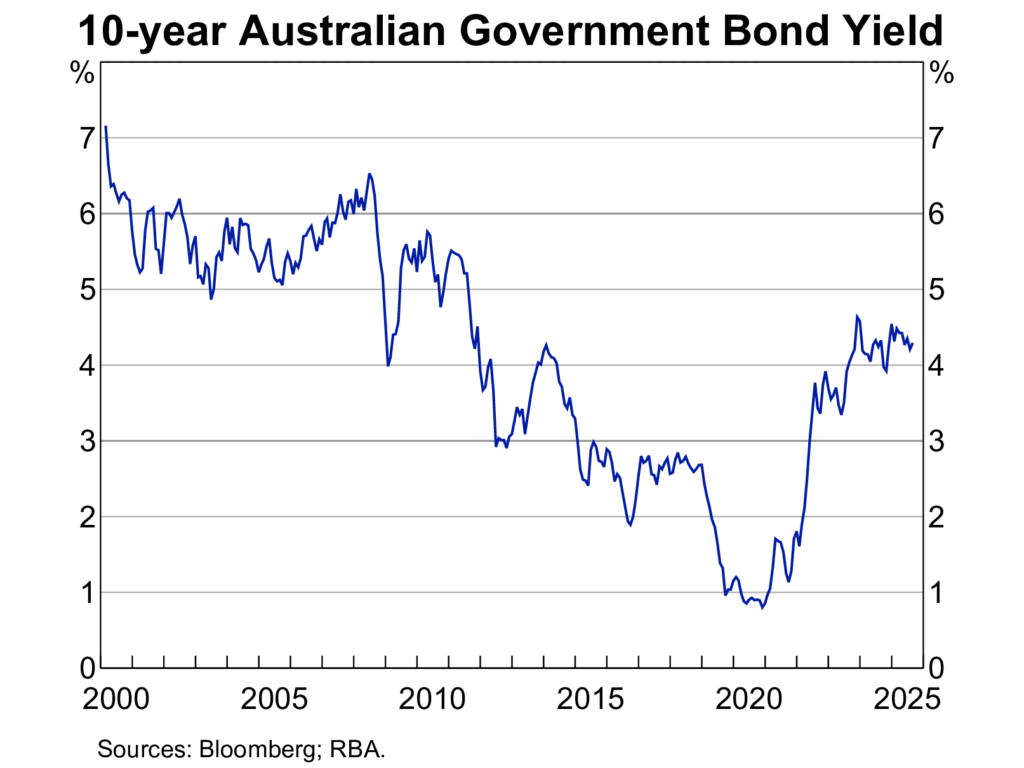
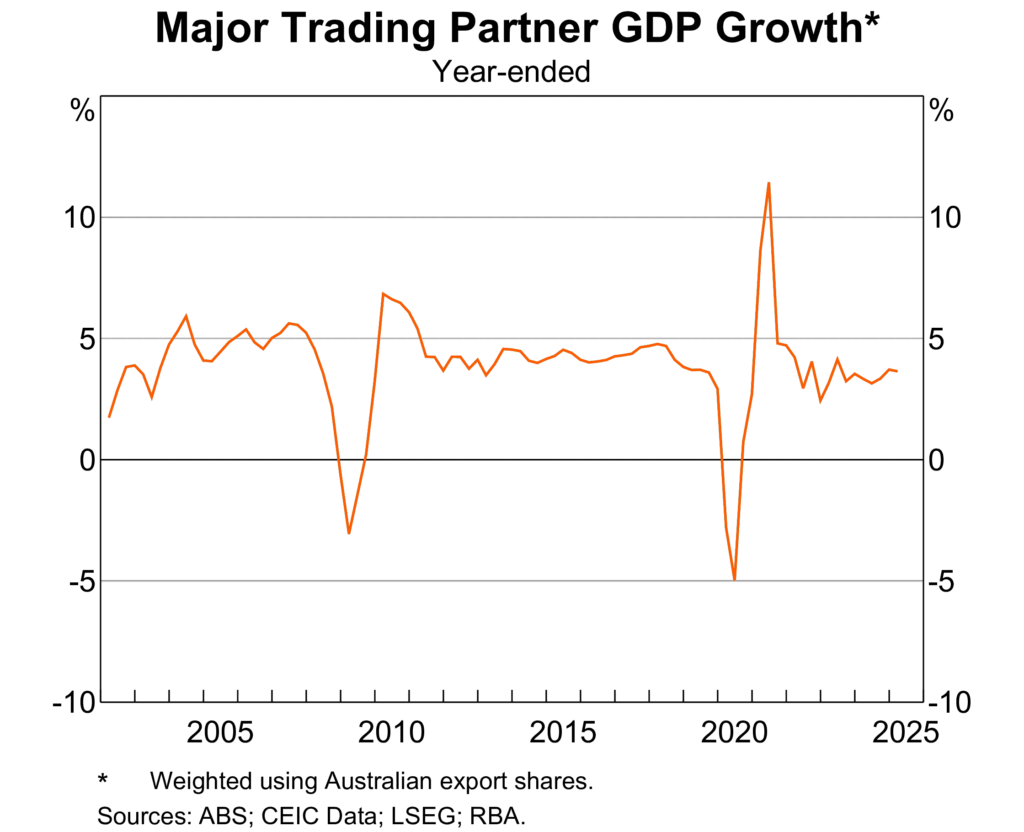
Economic conditions have tightened this year following three increases in the cash rate target. Government bond yields have risen, and the exchange rate has appreciated. Growth in consumer spending is slowing gradually as expected. Housing market momentum has softened, with prices declining across several capital cities and a noticeable drop in new housing loans. Labour market conditions remain resilient overall, while leading indicators suggest that any further rate cuts are likely to be limited in the near term. Looking forward, resolution of conflict in the Middle East remains inconclusive, with heightened uncertainty around inflation pressure and weaker economic activity. Prolonged uncertainty may also reduce growth in Australia’s major trading partners.
Monetary Policy Stance
The Board remains focused on preventing high inflation from becoming embedded. Achieving this requires the cash rate target to remain restrictive. The Board will take any action it considers necessary to achieve this outcome, including further increases in the cash rate target if required.
Current Economic Condition
Key Sources of Uncertainty
US tariffs will reduce demand for Australian exports.
The United States has imposed a 12.5% tariff on most Australian origin goods, causing US consumers and businesses to pay 12.5% more when purchasing Australian products. The direct impact is likely small, given that only 6% of Australian exports are destined for the United States. However, an average 30% or higher tariff has been imposed on China, Australia’s largest trading partner. Slowing economic growth in China could potentially reduce its demand for Australian exports. Therefore, the indirect impact on Australia’s economy remains uncertain.
Trade tensions increase policy uncertainty.
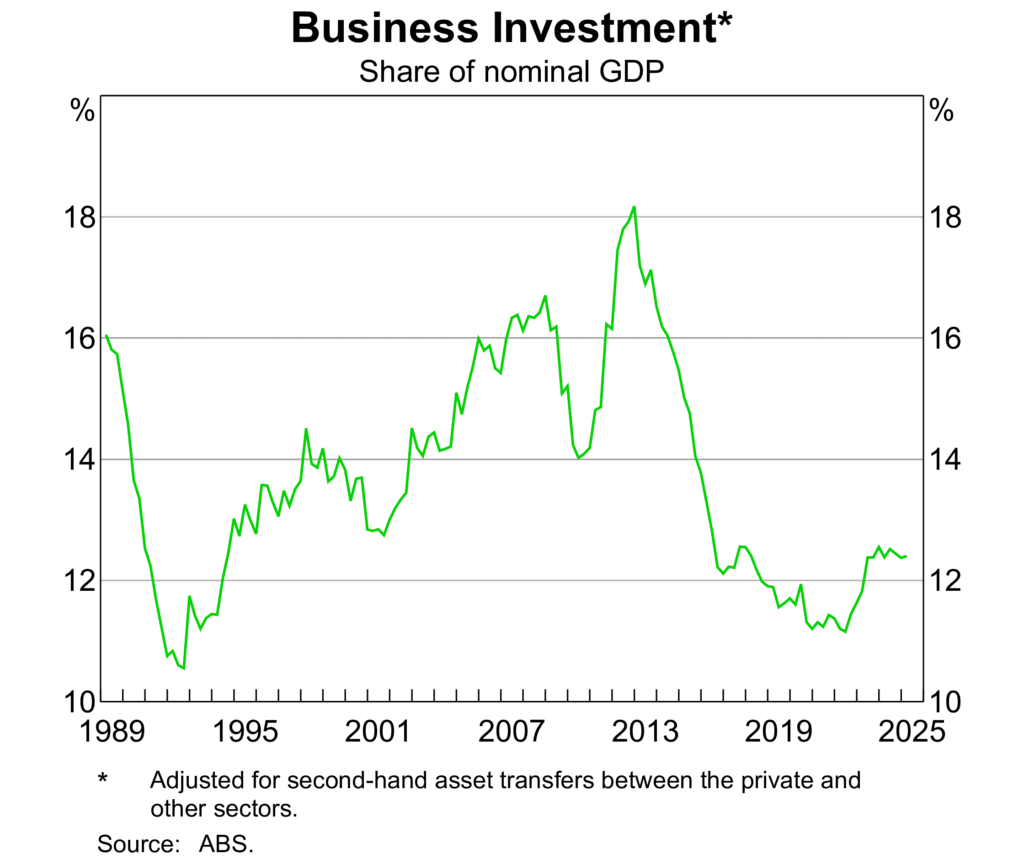
Heightened policy uncertainty typically prompts households to increase precautionary savings and leads businesses to postpone investment decisions, potentially dampening economic growth.
Labour market remains tight relative to full employment.
Demand for workers continues to outpace the available supply, contributing to a tight labour market. Both the unemployment rate and underemployment rate are below their average levels over the past few decades. The labour market and output growth are currently in a phase of recovery.
The unemployment rate tracks those who are looking for a job but don’t have one, and the underemployment rate tracks those who have a job but want to work more hours.
Underlying inflation anchors above the target range.
The conflict in the Middle East has driven fuel and related commodity prices sharply higher, already adding to inflation. Firms facing higher costs are raising prices of their goods and services. Short-term measures of inflation expectations have eased but remain higher than earlier in the year.
Key Economic Projections:
⚪ Housing market is projected to soften.
⚪ AI-related business investment in data centres is expected to accelerate.
⚪ Australian GDP growth will continue recovering but at a slower pace.
⚪ The unemployment rate is forecast to increase slightly.
⚪ The inflation rate is expected to remain above the 2–3 per cent target range for most of 2026.
⚪ Given higher uncertainty, the RBA will stay cautious and be ready to respond if needed.
Economic Calendar
ECONOMIC INDICATORS – Upcoming Data Releases
Labour Force Statistics [Released Monthly by ABS]
Provides statistics on employment, unemployment and workforce participation, revealing labour market conditions.
Gross Domestic Product (GDP) [Released Quarterly by ABS]
Measures the total market value of all final goods and services produced within Australia, serving as an indicator of economic activity and productivity growth.
Business Indicators [Released Quarterly by ABS]
Provides data on Australian businesses, including turnover, profits and inventory levels across key industries, offering insights into business performance.
Retail Trade [Released Monthly by ABS]
Tracks sales values in the retail sector, capturing trends in consumer spending and domestic demand.
International Trade [Released Monthly by ABS]
Reports monthly export and import values, reflecting trade balance and external economic conditions.
Consumer Price Index (CPI) [Released Quarterly by ABS]
Measures the change in prices paid by households for a fixed basket of goods and services, indicating inflation.
Wage Price Index (WPI) [Released Quarterly by ABS]
Tracks changes in wage rates paid by employers, indicating wage inflation.
Producer Price Index (PPI) [Released Quarterly by ABS]
Tracks average changes in prices received by producers, indicating upstream inflation pressures.
Household Expenditure Survey [Released by ABS]
Collects detailed data on household spending patterns across a broad range of goods and services, providing vital insights into consumer behavior and living standards in Australia. Conducted approximately every six years.
Price Stability And Inflation
Consumer Price Index – MONTHLY INDICATOR 3.5%
RBA’s Latest Statement
Energy and most related commodity prices stay above where they were prior to the conflict in the Middle East. Disruption to global oil supply is adding directly to inflation, and higher fuel costs are passing through to a wider range of goods and services, keeping inflation high for now. Firms experiencing higher input costs are increasing the prices of their goods and services, with more expected to follow. Headline inflation is expected to remain above 3 per cent for the rest of 2026 and is not projected to return to the middle of the 2–3 per cent target range until early 2028.
The RBA implements a flexible inflation target to maintain consumer price inflation between 2% and 3%.
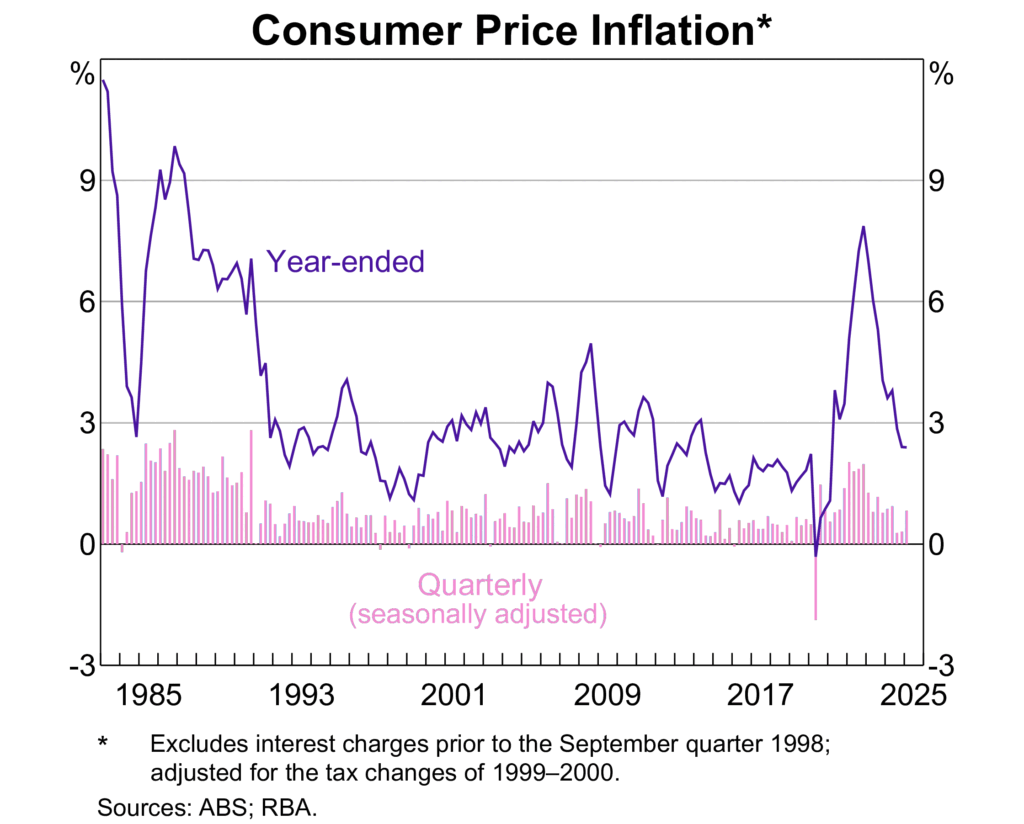
Inflation is the rise in prices of goods and services that households commonly purchase. A key lesson from history is that low and stable inflation is a prerequisite for a strong economy, sustained full employment, and growth in real wages.
The Consumer Price Index (CPI) is the most widely recognized measure of inflation in Australia. It captures the percentage change in prices of a basket of goods and services that encompasses thousands of items typically purchased by Australians, categorized into 11 groups.
Headline and Underlying Inflation
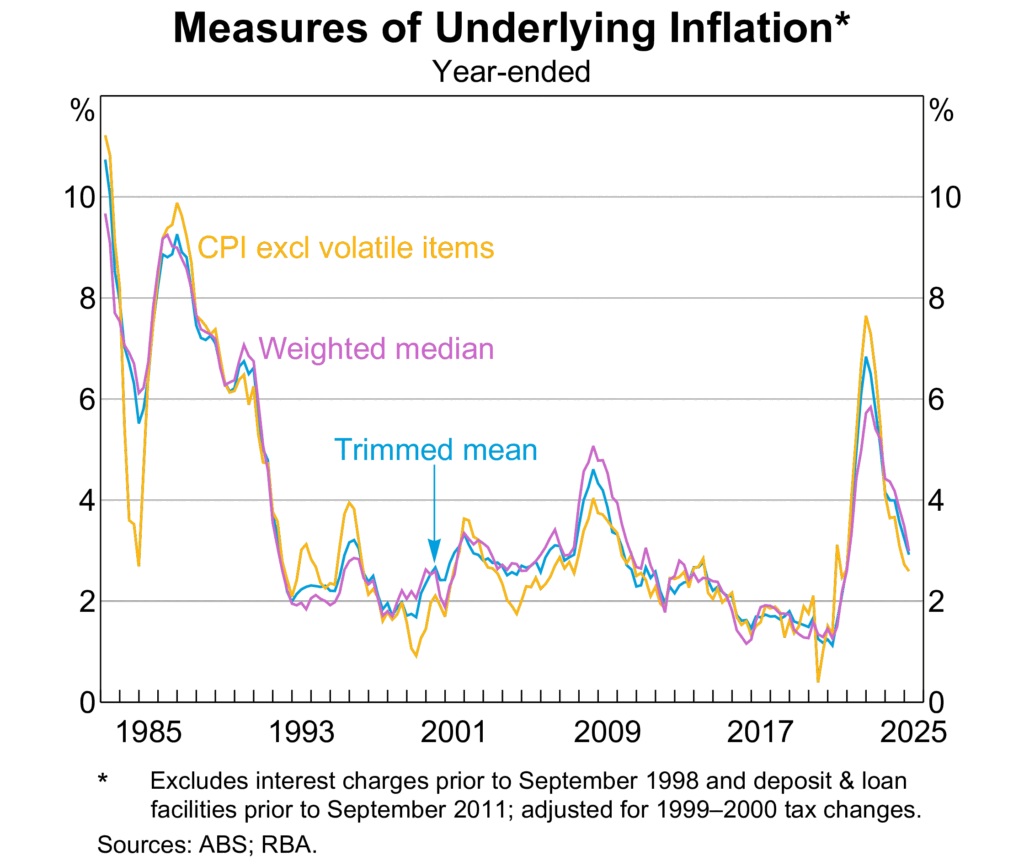
Headline inflation reflects the prices of all goods and services in the Consumer Price Index, whereas underlying inflation excludes unusually large or volatile price changes.
RBA INFLATION FORECAST
CAPITAL CITIES COMPARISON
Labour Market Condition
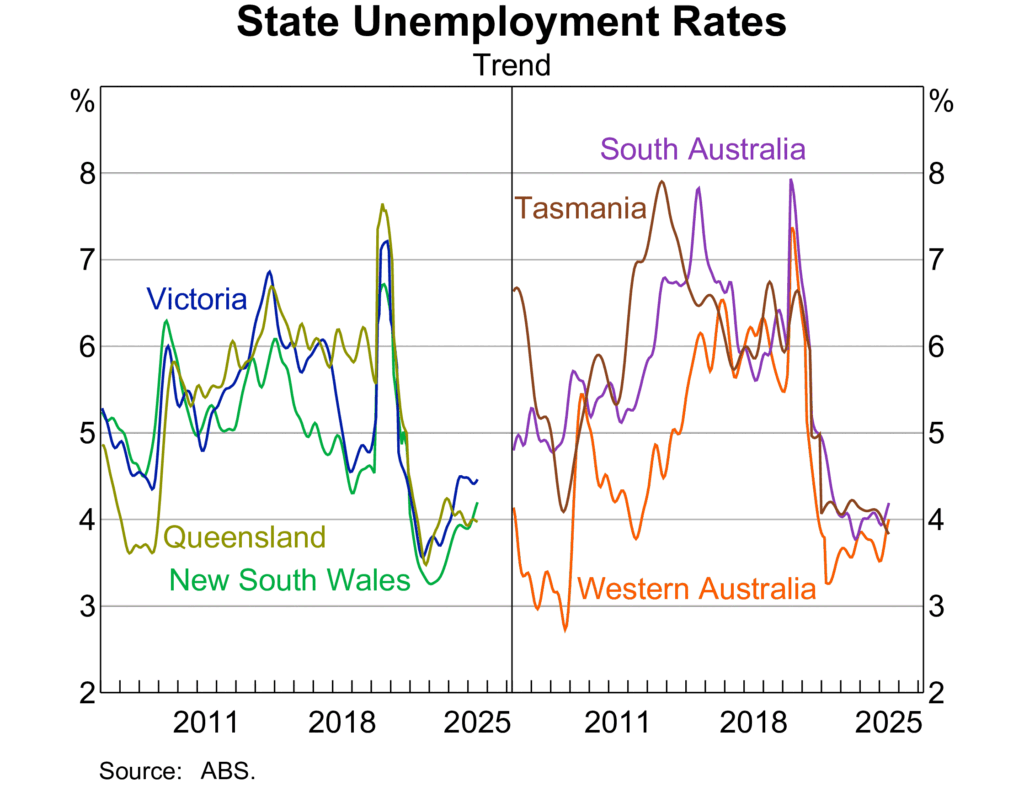
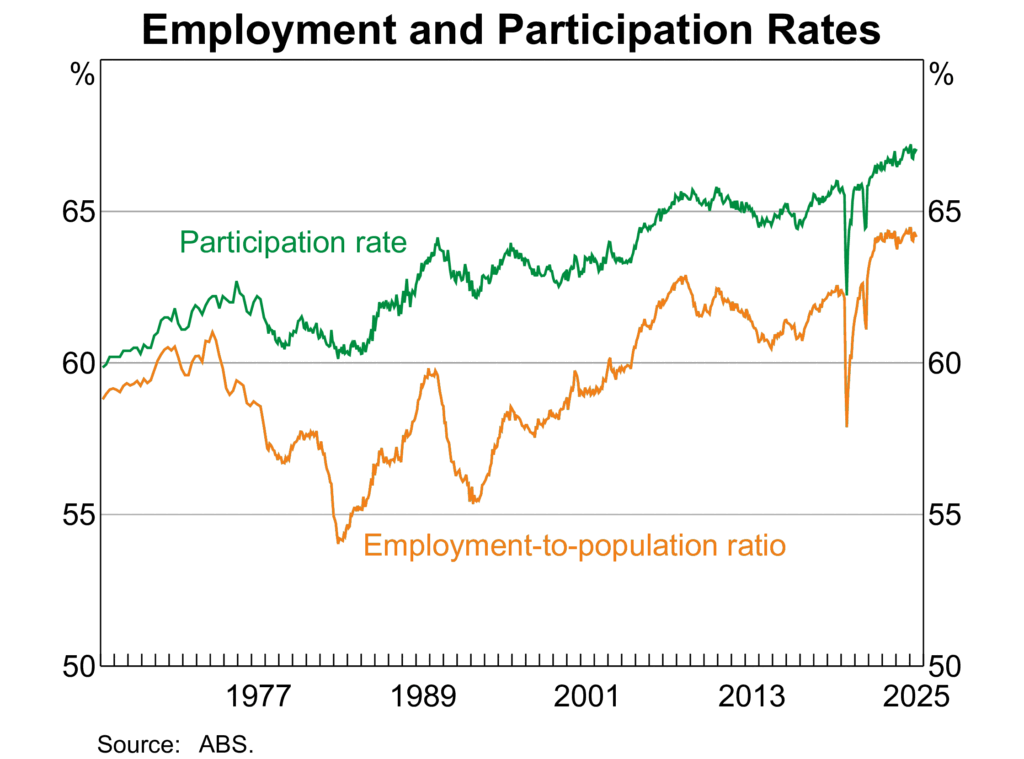
LABOUR FORCE PARTICIPATION & UMEMPLOYMENT RATE
Latest Labour Market Statistics (seasonally adjusted)
In August 2026, the unemployment rate increased marginally to 4.6%, the labour force participation rate rose to 67.1%, and the underemployment rate fell to 6.2%.
Tight Labour Market Conditions
Labour demand continues to surpass the available supply of workers, thereby maintaining tight conditions in the labour market.
⚪ Low unemployment and underemployment rates.
⚪ A high share of firms reporting labour as a significant output constraint.
⚪ A high ratio of job vacancies to unemployed workers, above pre-pandemic levels.
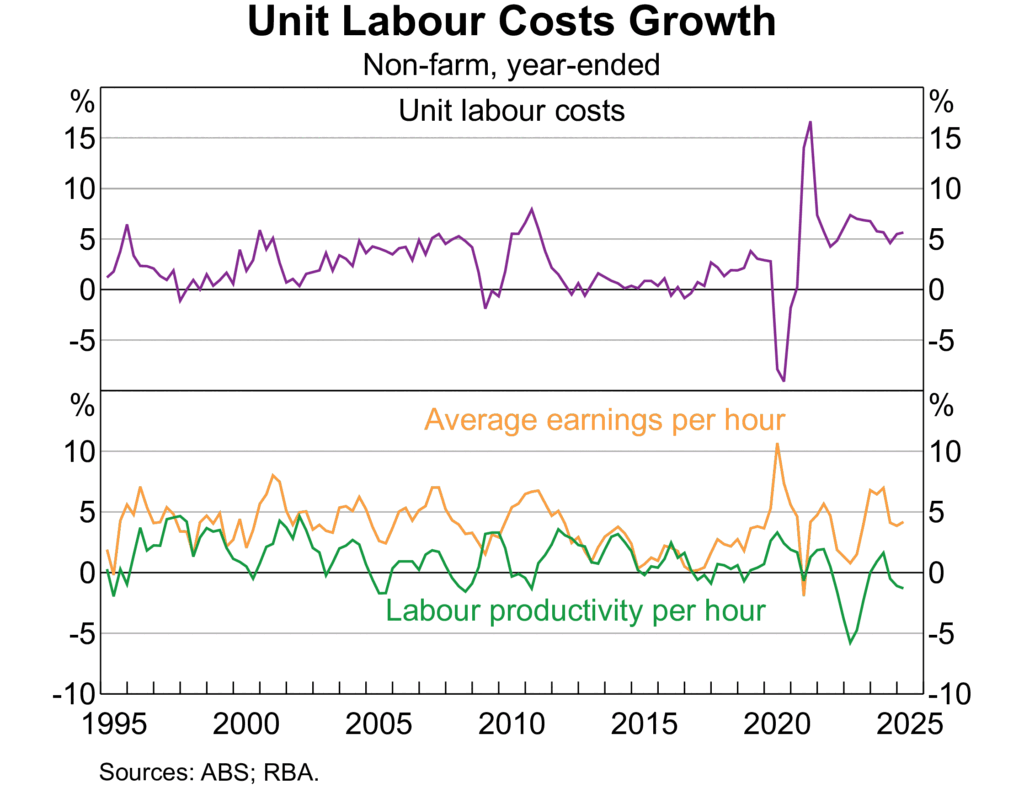
Unit Labour Cost
The Wage Price Index (WPI) rose by 3.3% over the past 12 months. Growth in unit labour costs remains high, primarily due to weak productivity growth. This trend further reflects ongoing tightness in the labour market, where firms face increasing wage pressures amid limited productivity gains.
Economic Growth
Australian National Accounts
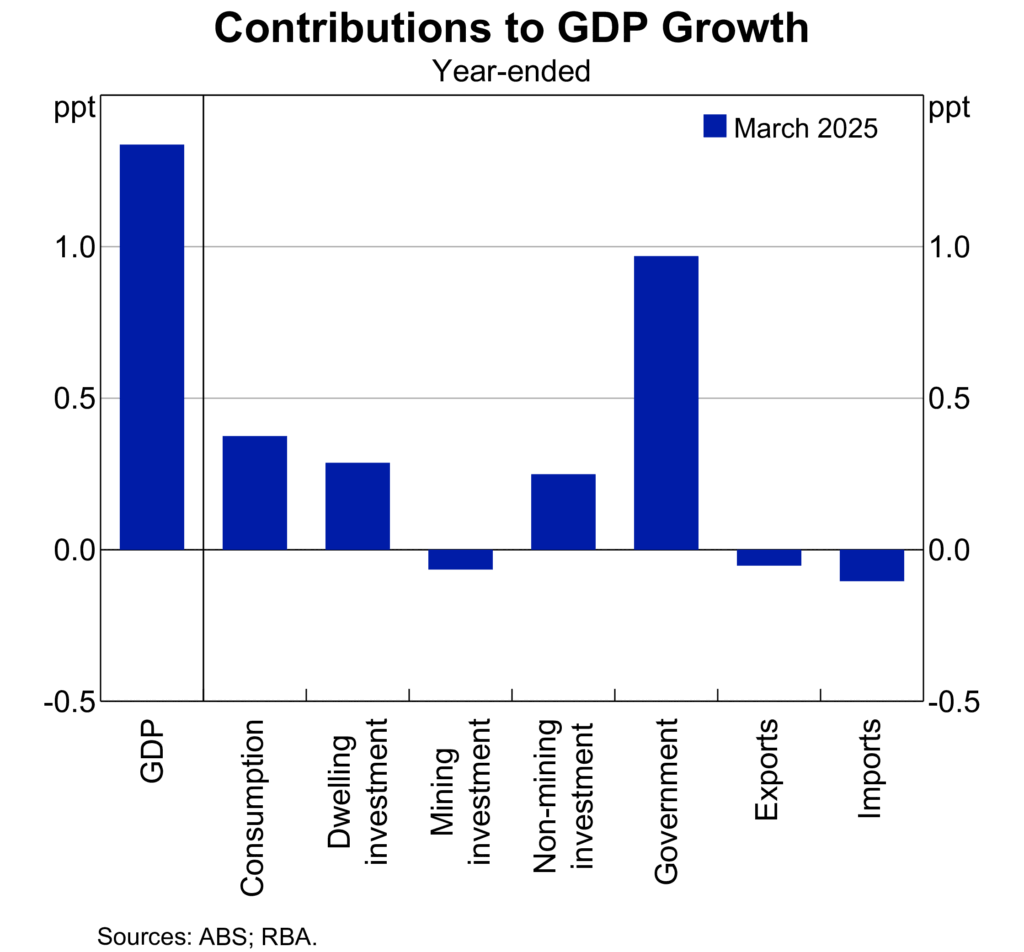
Economic growth is the term used to describe an increase in the size of a country’s economy over a period of time. The size of an economy is typically measured by the total production of goods and services, known as gross domestic product (GDP).
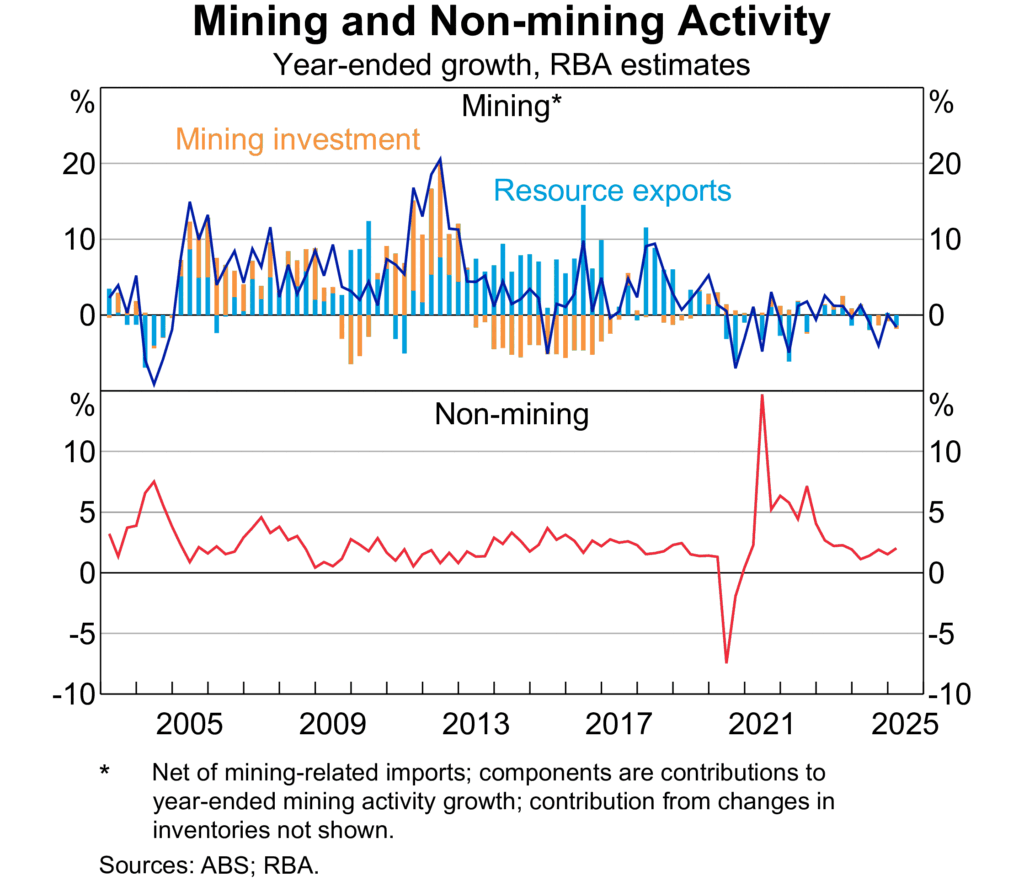
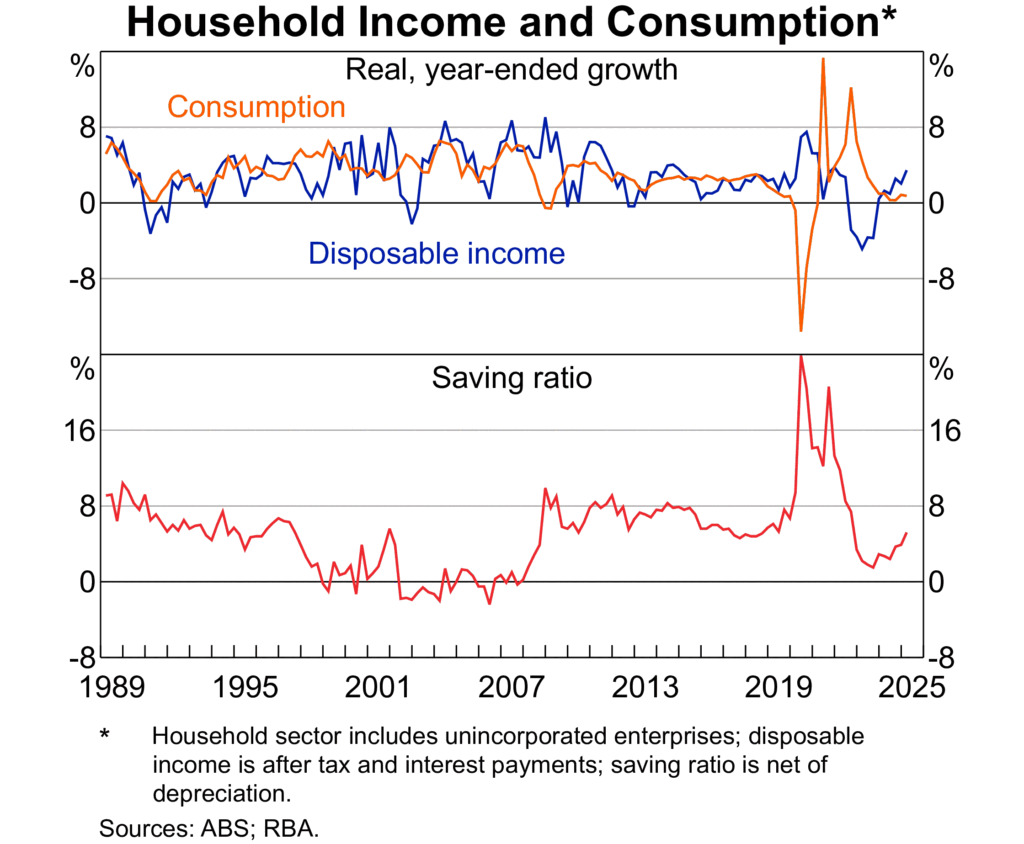
The latest reading of nominal GDP shows a 0.8% increase. Australia’s GDP growth is still projected to improve, but at a slower pace than earlier anticipated. While leading indicators have not shown significant deterioration, the expected recovery is likely to be more subdued due to “softer global demand” and “weaker momentum in consumer spending”.
Higher domestic prices from rising labour costs in public and private sectors have weakened demand. Price increases for services including health, education and rent have reduced consumer spending power. Strong fuel price growth this quarter has also raised costs and lowered domestic final demand. If the RBA lowers cash rates, the dampening effects of weaker demand would be partly offset.
The imposition of tariffs by the United States has increased uncertainty in global trade conditions. Although Australia’s direct exports to the US are limited, the broader effects of these tariffs on global supply chains may indirectly worsen Australia’s trade balance and economic outlook.
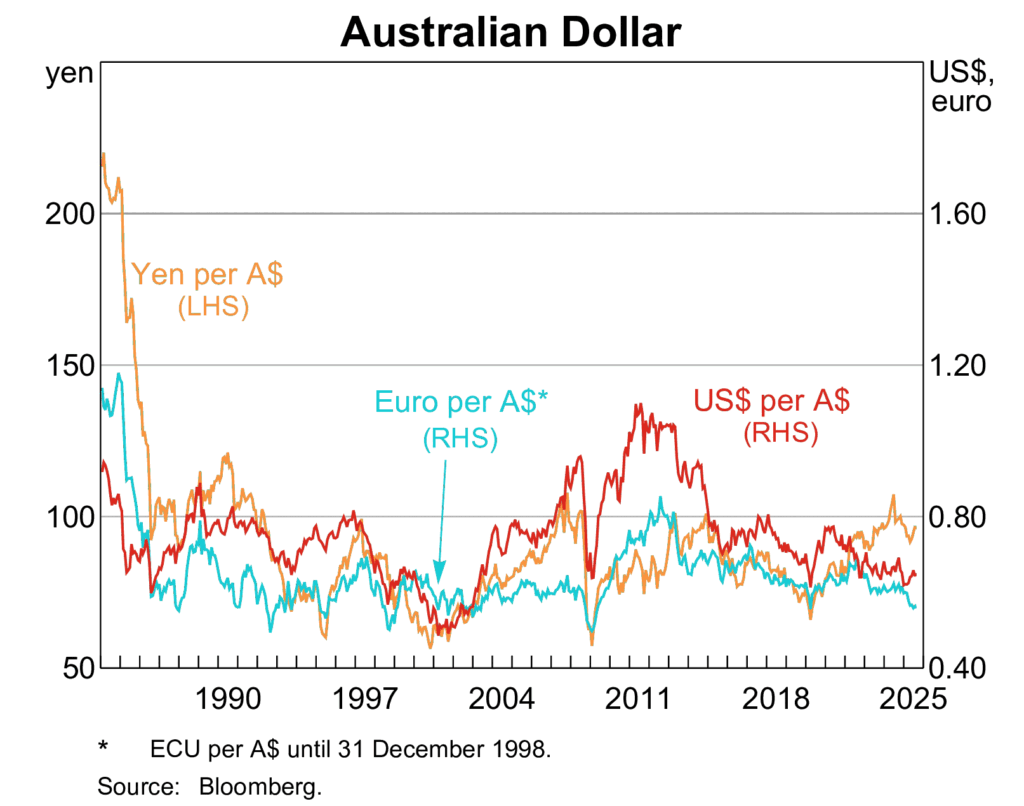
CROSS EXCHANGE RATES
STRONG AND WEAK CURRENCIES
SHORT – TERM DRIVERS OF THE AUD
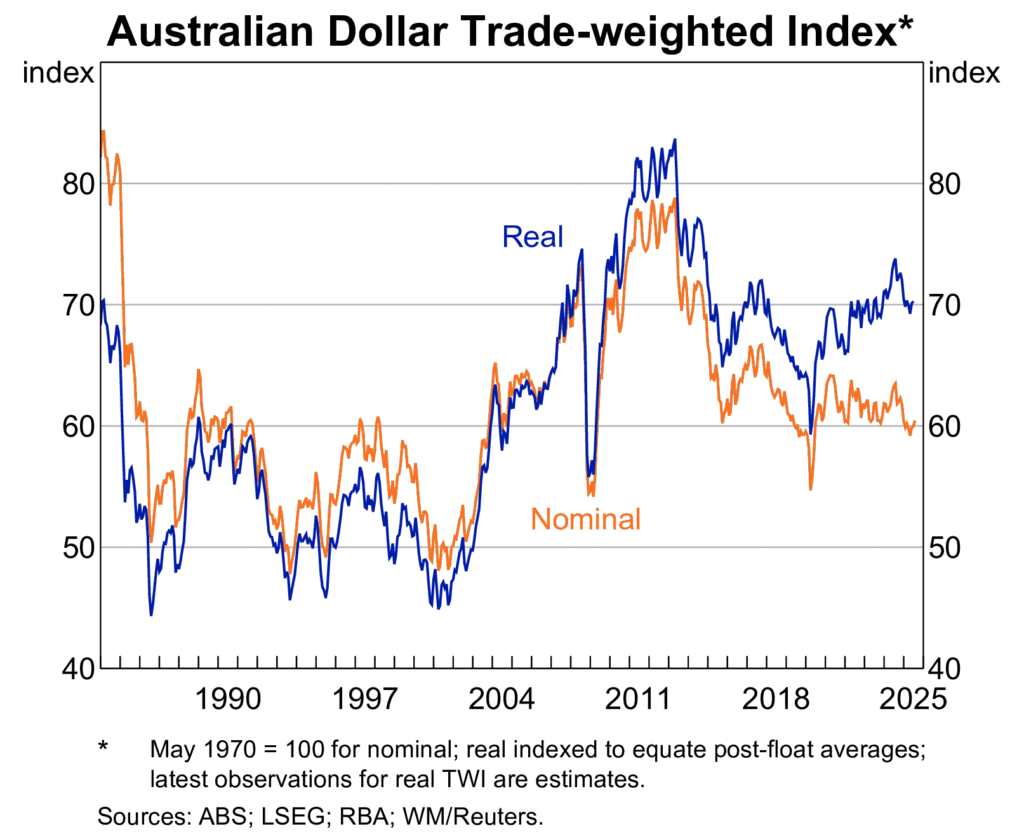
Australia operates a floating exchange rate regime since 1983, meaning that movements in the Australian dollar are determined by the demand for and supply of Australian dollars in the foreign exchange market.
Risk Sentiment
The Australian dollar (AUD) generally appreciates when global investor confidence and risk appetite are strong and depreciates when market sentiment weakens.
Global Financial Markets
AUD movements closely track global equity markets, typically strengthening alongside rising equity prices and weakening during market declines.
Speculative Activity
Short-term fluctuations in AUD can result from speculative trading, as market participants buy or sell the currency in anticipation of future movements.
RBA Intervention
Significant supply-demand imbalances can lead to heightened AUD volatility; in such instances, the Reserve Bank of Australia (RBA) may intervene to restore orderly market functioning.
The Trade-Weighted Index (TWI) measures the value of the Australian dollar against the currencies of its major trading partners (base 100 in May 1970) and is used to assess the AUD’s overall strength.
LONGER – TERM DRIVERS OF THE AUD
Interest Rate Differentials
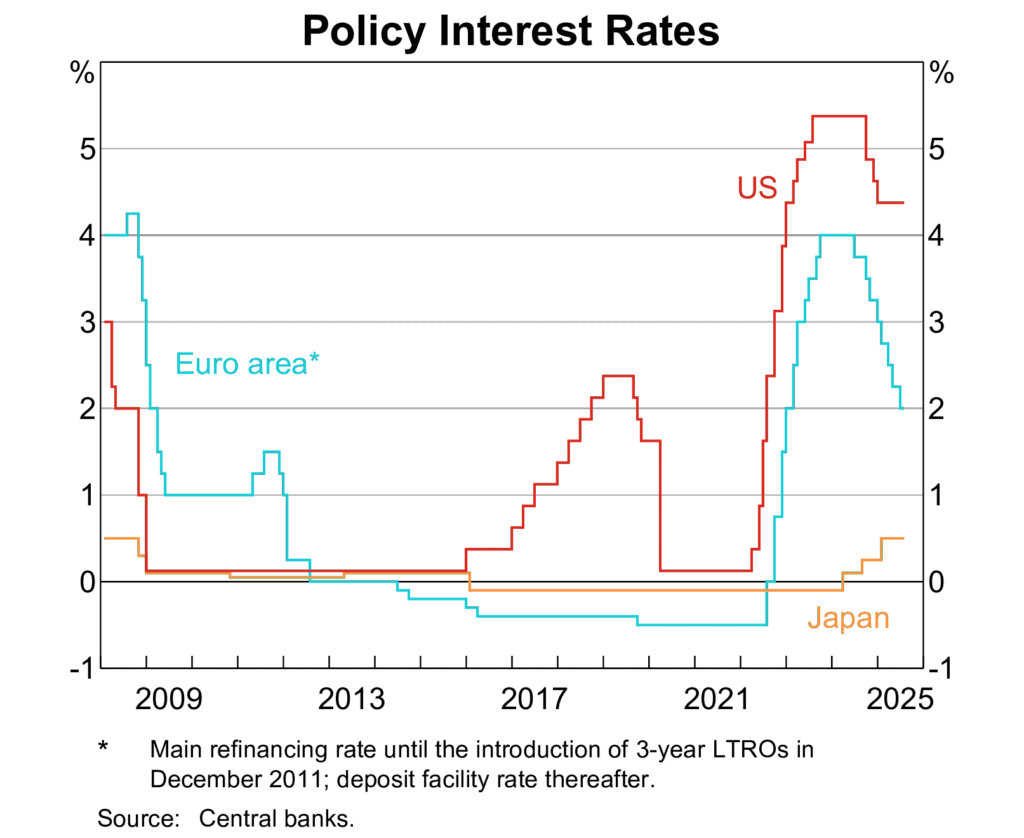
When Australian interest rates rise relative to those in major advanced economies such as the US, Europe and Japan, Australian assets become more attractive and boost capital inflows while reducing outflows. This increased demand and constrained supply support an appreciation of the Australian dollar.
Terms of Trade & Commodity Prices
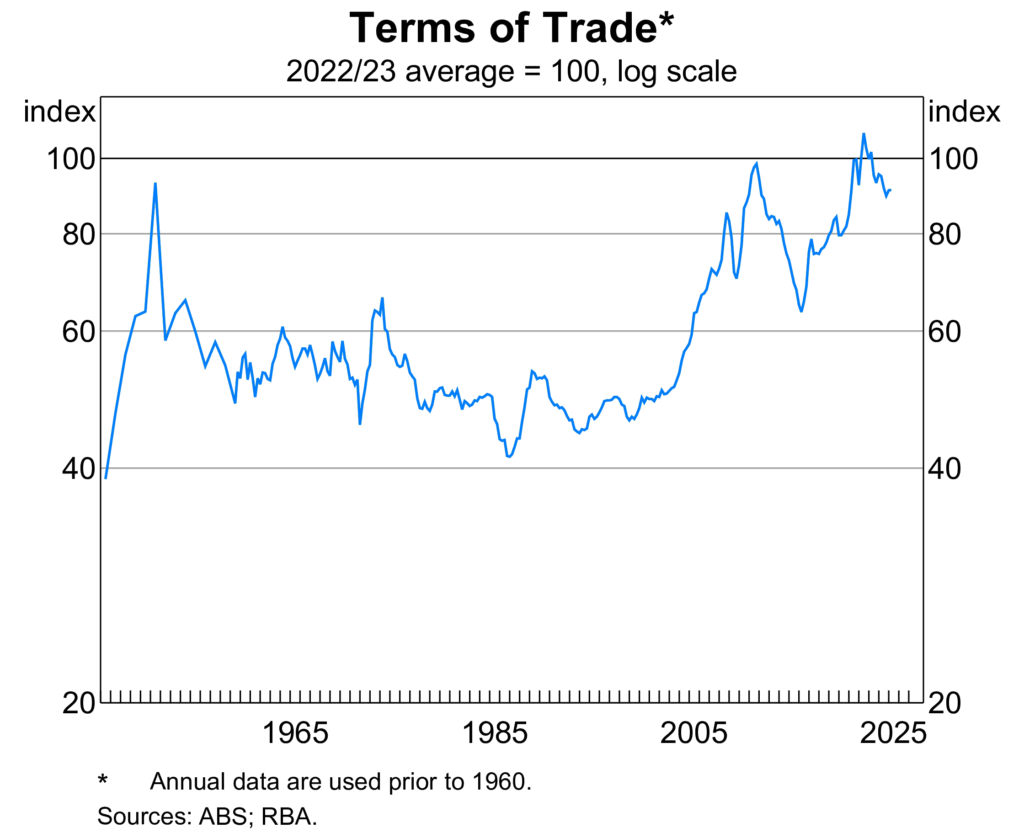
The Australian dollar is closely linked to terms of trade, which measures the ratio of export prices to import prices. An increase in terms of trade typically leads to appreciation of AUD. Rising commodity prices such as iron ore, natural gas, and agricultural products boost export earnings and attract foreign capital, further supporting the currency. This is why the Australian dollar is often referred to as a “commodity currency.”
International Trade
Australian dollars are also bought and sold to facilitate international trade in goods and services. When Australians export, overseas buyers purchase Australian dollars to pay the exporter. This increases demand for AUD and pushes up its value. When Australians import, they sell Australian dollars to obtain foreign currency. This increases supply and causes depreciation.
Prices and Inflation
Purchasing Power Parity (PPP) links exchange rates to price levels between countries. Over time, exchange rates adjust so an identical basket of goods and services costs the same in any two economies. If Australian goods are more expensive, demand for them and for AUD falls. This causes the AUD to depreciate. A lower value of AUD makes Australian goods cheaper for foreigners. The process continues until Australian goods and services are no longer expensive relative to those in other economies.
Interest Rates

Consumer Price Inflation
ECONOMIC GROWTH

Labour Market Condition
the australian dollar
Media Mentions