
Bitcoin is now widely recognized as digital gold due to its limited supply of 21 million tokens and its ability to enable peer-to-peer (P2P) transactions without the involvement of traditional financial intermediaries. It correlates with the US dollar because it is priced in USD and influenced by global liquidity, interest rates, and its role as a risk asset in macroeconomic cycles.
However, the Bitcoin market is relatively illiquid, with much lower trading volume compared to gold. As a result, the market can be significantly moved by large trades from pseudonymous major owners, increasing the risk of forced liquidation for retail investors who buy and hold Bitcoin with leverage (trading a large position with only a small margin deposit).
It is practically impossible to outline all the pricing factors of Bitcoin, but one important pattern is its capacity as an inflation hedge:
Historical data suggest that Bitcoin has tended to outperform significantly during periods of US monetary expansion, including quantitative easing and cuts to the target federal funds rate.
show less
The US dollar is experiencing structured depreciation driven by:
(1) The US government is targeting a resurgence in domestic manufacturing as a strategy to stimulate local employment growth, and a weaker US dollar supports US exports.
(2) The downgrade of US Treasury securities lowers market demand for US dollars.
(3) Market prices in expectations of further cuts in the federal funds rate.
Central banks worldwide have been systematically reallocating reserves from US dollars into gold as a long-term store of value, triggering strong and persistent bullish momentum in gold prices.
For institutional investors, gold emerges as a leading hedge against exposure to US stocks in the face of heightened geopolitical risk and US tariffs which increase uncertainty and volatility in US equity markets.
Thus, excess demand coupled with limited supply leads to a rapid and significant escalation in gold prices. Strong support from central banks and institutional investors keeps gold prices resilient.
Unlike gold, silver attracts greater speculative interest, as investors seek alternatives given the limited production and inventory of gold. Spikes in the gold-to-silver ratio, which indicates the number of ounces of silver required to purchase one ounce of gold, also boost investor confidence in buying silver.
show less
From a macroeconomic perspective, the ultimate goal of AI development is to drive automation and enhance the productivity of goods and services.
Deflation could arise in the future when production expands faster than the money supply, driving down the cost of goods and services.
A bold speculation:
In a deflationary scenario, US interest rates may fall to zero, helping the US government relieve the burden of high interest payments on its Treasury debt.
show less🆕 4. Are Gold and Silver experiencing a structural shift? What is the biggest enemy of precious metals?
Published: 21 March, 2026
Disclaimer: This content is for informational purposes only and does not constitute investment advice, a recommendation, or an offer to buy or sell any financial instrument. Readers should conduct their own research and consult a qualified financial advisor before making any investment decisions.
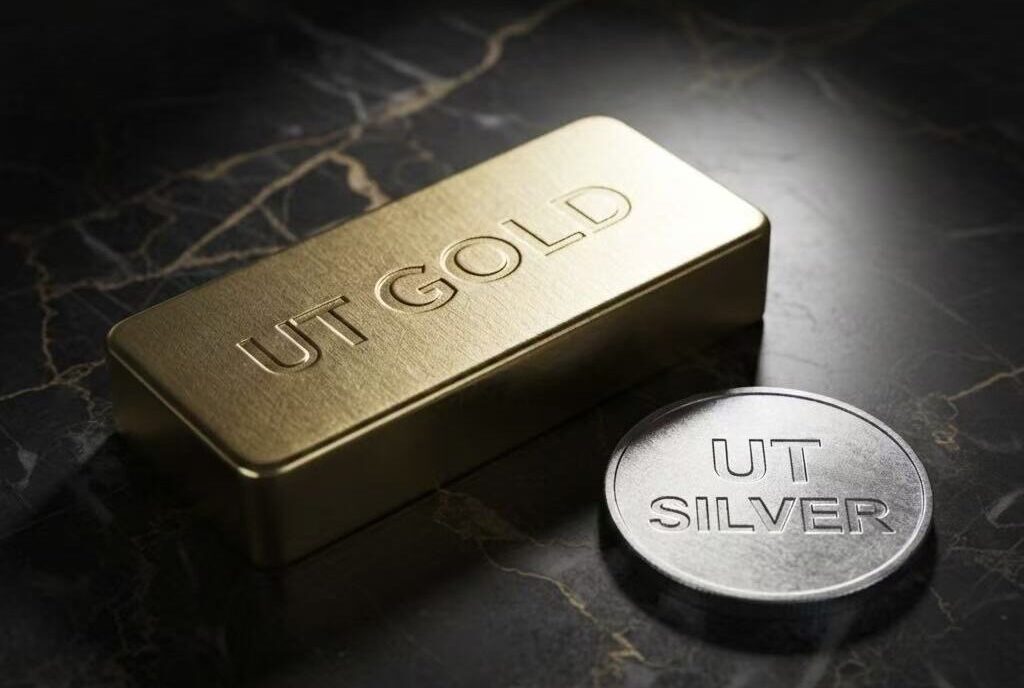
On January 28, 2026, gold spot (XAU/USD) marked a milestone, reaching an all-time intraday high of around $5,600 per ounce. Since then, through March 20, the market experienced two significant rapid declines.
(1). What triggered the surge to $5,600?
Gold was strongly buoyed in early 2026 by robust physical demand tied to Indian cultural festivals, led by Diwali (the Festival of Lights, 20 October 2025), which drove the country’s largest annual gold purchases and was followed by Makar Sankranti (14 January 2026) and Vasant Panchami (23 January 2026). The wave continued with a surge in buying ahead of the Chinese Lunar New Year (17 February 2026), creating a pronounced short-term spike in gold demand.
Speculative capital in both spot and futures markets timed with these events and amplified by high leverage further propelled gold prices, contributing to the surge toward record levels.
(2). What drove the rapid bounce back?
CME Group (Chicago Mercantile Exchange) margin hikes of 9% in early February triggered systematic deleveraging in COMEX gold futures while spot market liquidity was squeezed, contributing to a rapid drawdown. Following the festival seasons, highly leveraged speculative capital began to unwind to take profits as the cost of maintaining leverage mounted. One notable low after the January record peak occurred at around $4,400 per ounce on 2 February 2026, a move market consensus views as part of a post-peak corrective phase.
For the remainder of February, geopolitical tensions between the United States and Middle Eastern nations intensified. Concerns over potential escalation with Iran amplified safe-haven demand. By early March, this surge in defensive buying pushed gold prices above $5,400 per ounce.
The ongoing US–Iran conflict has disrupted Crude Oil and LNG (Liquefied Natural Gas) shipments through the Strait of Hormuz, triggering a sharp supply shock with Brent crude reaching around US $119 per barrel and WTI climbing to approximately US $100 per barrel during peak trading. Rising energy costs are adding inflationary pressure to both energy and broader consumer prices. Hawkish remarks from Chair Powell during the March FOMC in response to potential inflation risks have lifted inflation expectations and lowered market bets on rate cuts in 2026.
Looking at the four components of the US Consumer Price Index (CPI), rising oil prices are driving up food prices through higher transportation and production costs. They are also directly lifting energy costs. Tariffs on imports are increasing commodities prices, while restrictive immigration policies are tightening labour supply, putting upward pressure on services prices. Together, these factors suggest that US CPI faces significant upside risk.
Gold and crude oil exhibit a pronounced inverse relationship. Continuing the bullish momentum in crude oil, gold prices retreated below $4,500 per ounce again on 20 March 2026.
(3). A structural change or a temporary short-term shock?
Recent pullbacks suggest that gold remains highly sensitive to short-term macroeconomic and geopolitical events. However, near-term bearish momentum does not necessarily signal the end of the long-term bullish trend. Markets move in cycles, and temporary pullbacks are a natural and healthy part of a broader uptrend.
From a macroeconomic perspective, gold continues to attract strong long-term support. Key drivers include sustained central bank demand, rising geopolitical tensions, concerns over US dollar debasement, and the rapidly mounting US government debt and fiscal deficit, threatening a potential government shutdown. Additional support comes from potential rate cuts under incoming Federal Reserve Chair Kevin Warsh and persistent labour market imbalances resulting from highly restrictive immigration policies enacted during the Trump administration. Together, these structural and policy-related factors underpin a fundamentally bullish outlook for gold, even as the market experiences intermittent short-term corrections.
(4). Silver is a price-taker relative to gold, not a price-setter.
Gold and silver markets differ markedly in size and liquidity. Gold, with around US$15 trillion in financial form, dwarfs silver. Over the past five years, gold ETFs averaged US$2.3 bn/day versus US$0.7 bn for silver, with even larger gaps in futures (US$55 bn vs. US$11 bn) and OTC trading (US$97 bn vs. US$13 bn). Silver’s average intraday bid‑ask spread is 9 bps, more than four times gold’s 2 bps. Its smaller and less liquid market makes it more vulnerable to capital flows and demand or supply shocks.
Rising prices late last year and into 2026 spurred momentum‑based trading. Through February, silver ETF volumes hit US$11.4 bn, nearly nine times FY25 levels, while futures and OTC activity rose to US$71 bn and US$59 bn per day, respectively.
Silver’s volatility is about twice that of gold. At short horizons, gold leads silver, while silver provides no comparable signal for gold. This reflects gold’s role as the primary “information anchor” in precious metals, absorbing macro shocks first, with silver acting as a higher-beta satellite that follows gold’s moves.
Silver tends to behave as a hybrid, part precious metal and part industrial metal. More than 60% of total silver demand comes from industrial and technology uses. Looking ahead, advances in AI infrastructure are expected to boost silver demand for electrical applications. Thus, near-term bearish sentiment in silver is not expected to persist and the long-term outlook remains bullish. Silver’s historical high of US$121.62 per ounce on January 29, 2026 may not mark the end of its upward moves.
show less🆕 5. How does a sudden Oil Price Shock drag on U.S. economic growth? Should stagflation be a natural consequence?
Published: 22 March, 2026
Stagflation is a period of sluggish economic growth accompanied by high inflation and rising unemployment.
The ongoing US–Iran conflict has curtailed crude oil shipments through the Strait of Hormuz, a vital energy chokepoint, causing a sharp supply shock and elevated crude oil prices.
If the surge in energy costs from supply disruptions persists, it will raise production and transportation expenses, thus slowing business activity and squeezing corporate profit margins. These higher costs are often passed on to consumers, pushing up energy and broader consumer prices. Slower economic activity can also constrain hiring and increase unemployment. Collectively, these effects may contribute to stagflation, with inflation rising amid stagnant economic growth and an elevated unemployment rate.
show less